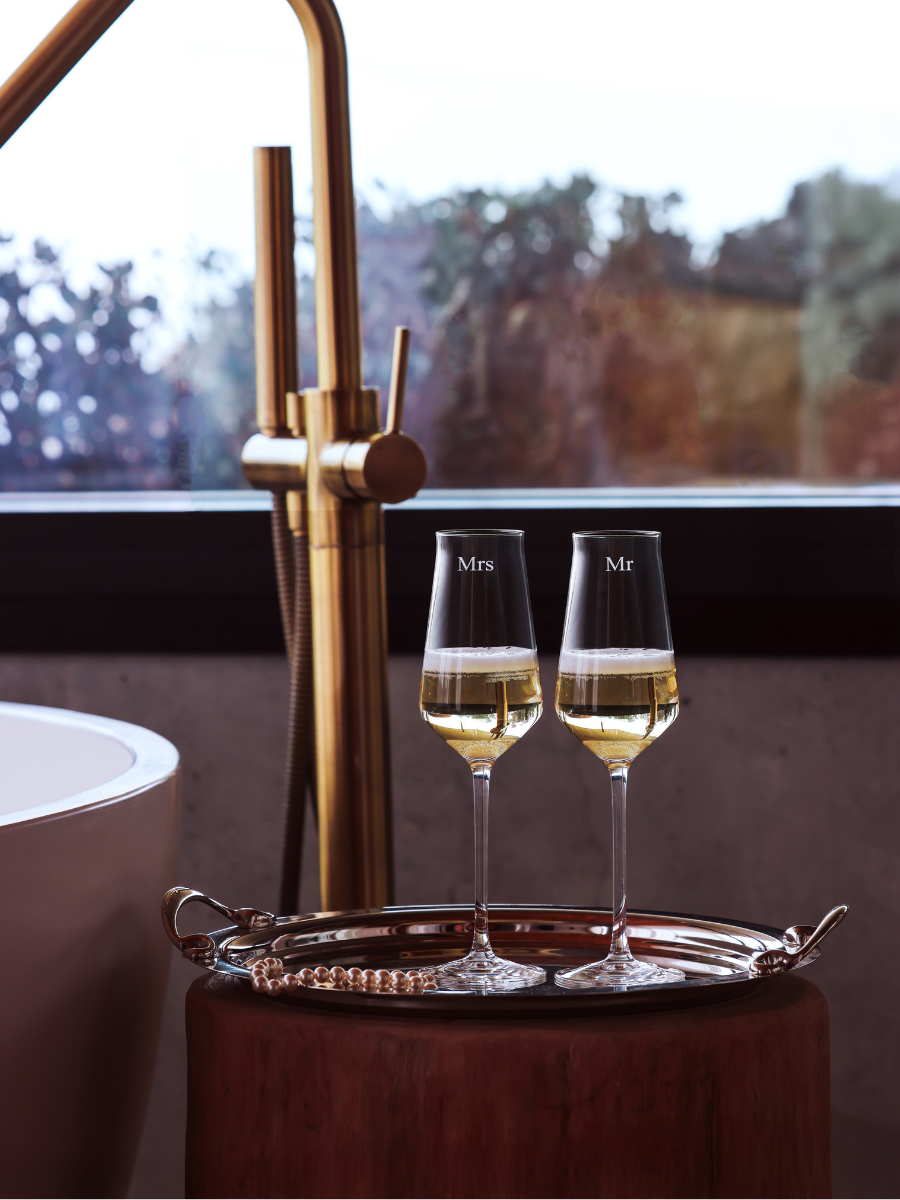
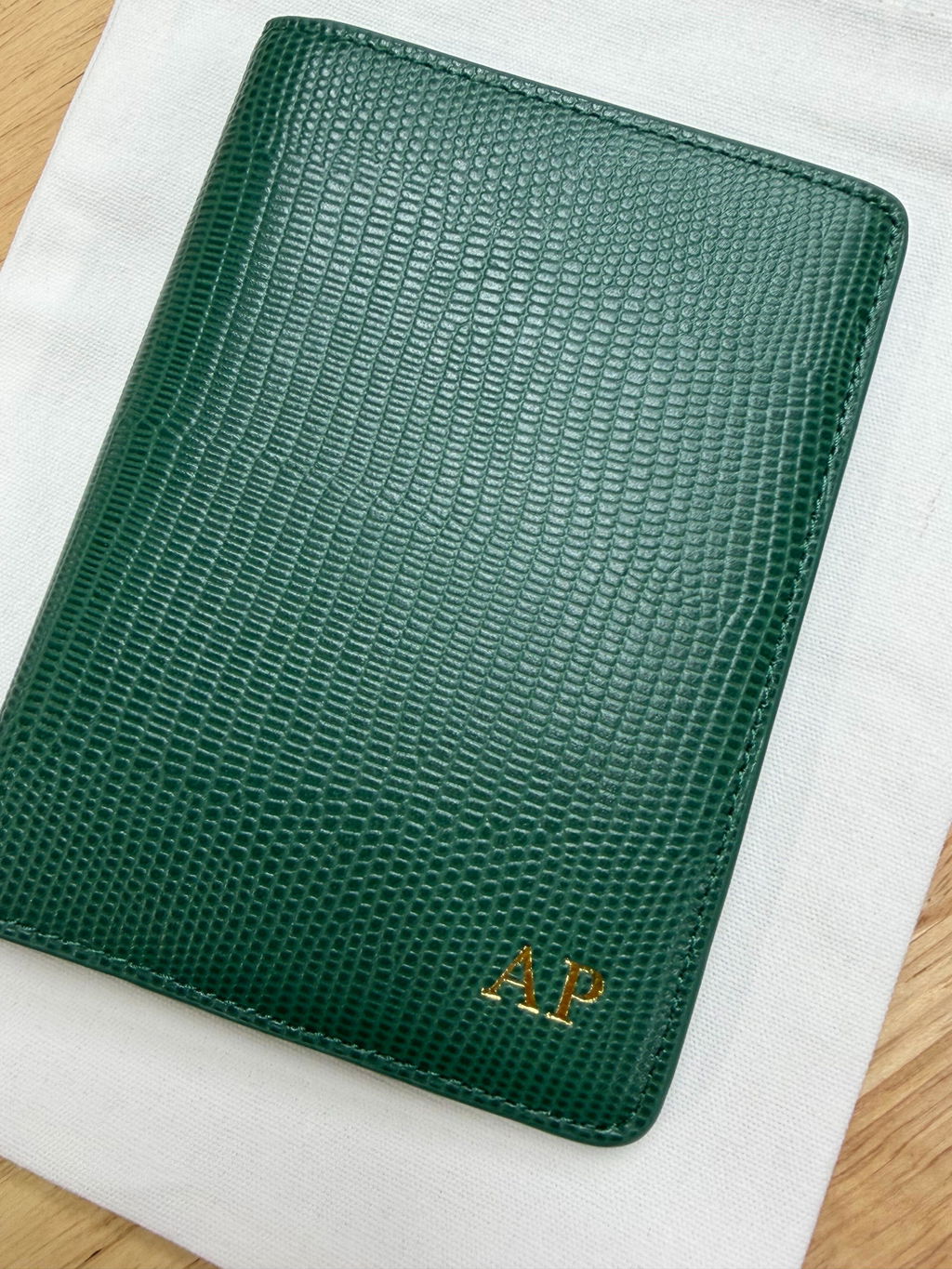
Monograms have staying power because they do a simple job well: they mark something as belonging to someone. Historically, they’ve been used as identifying marks on objects such as coins, and later as personal signatures and decorative identifiers. For Valentine’s Day, that idea translates into a gift that feels specific without needing a long message.
1) Start with meaning, not lettering
Before you choose a font or layout, decide what the monogram should say about the relationship.
-
For one person: one initial is clean and timeless.
-
For a couple: use either
- A shared initial (best when a shared surname exists), or
-
Two initials side by side if surnames are kept separate.
-
For a milestone: add a discreet date (anniversary, engagement, first home, the day you met).
A useful check: will the mark still make sense in five years? If yes, you’re on the right track.
2) Choose a monogram style that won’t date quickly
Monograms look best when they’re readable and restrained.
-
Single letter: minimal, modern, hard to get wrong.
-
Two letters: ideal for couples who want parity.
-
Three letters: classic format; many etiquette guides place the surname initial in the centre and larger.
If you’re unsure about order, avoid guesswork and stick to one initial.
3) Pick the right item
A monogram is wasted on something that stays in a cupboard. Practical pieces win because they keep showing up in everyday life.
Good choices include:
- Glassware (wine, champagne, tumblers)
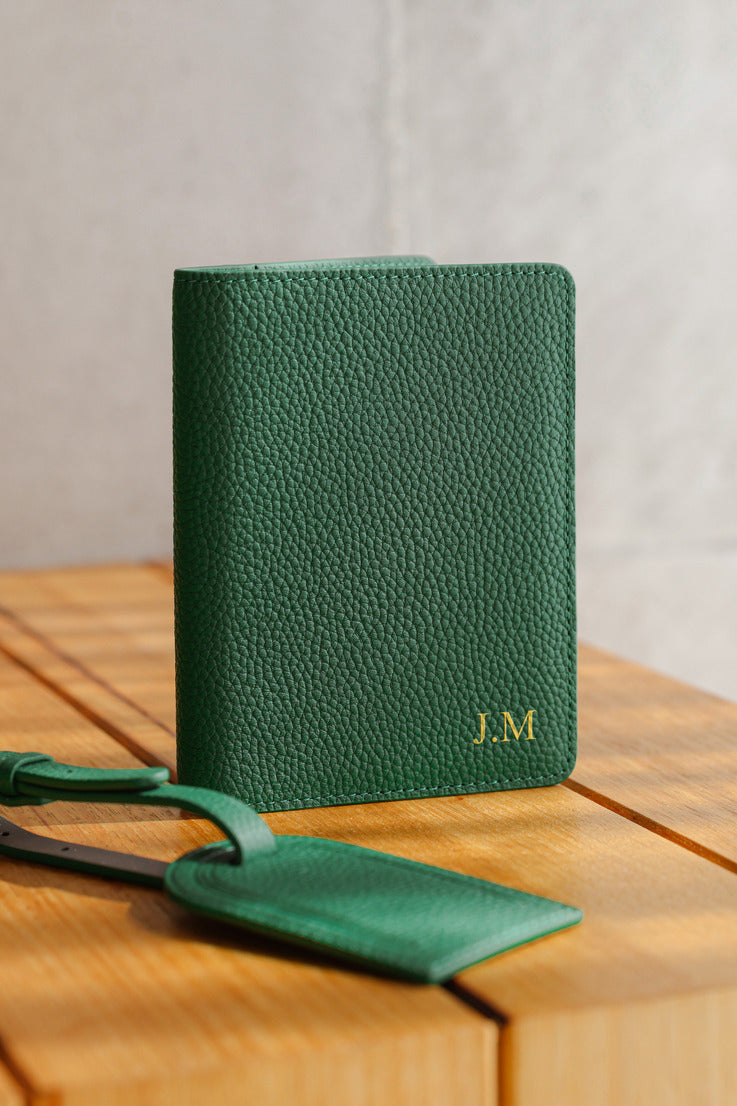
- Travel accessories (passport holders, luggage tags)
- Stationery (note cards, journals)
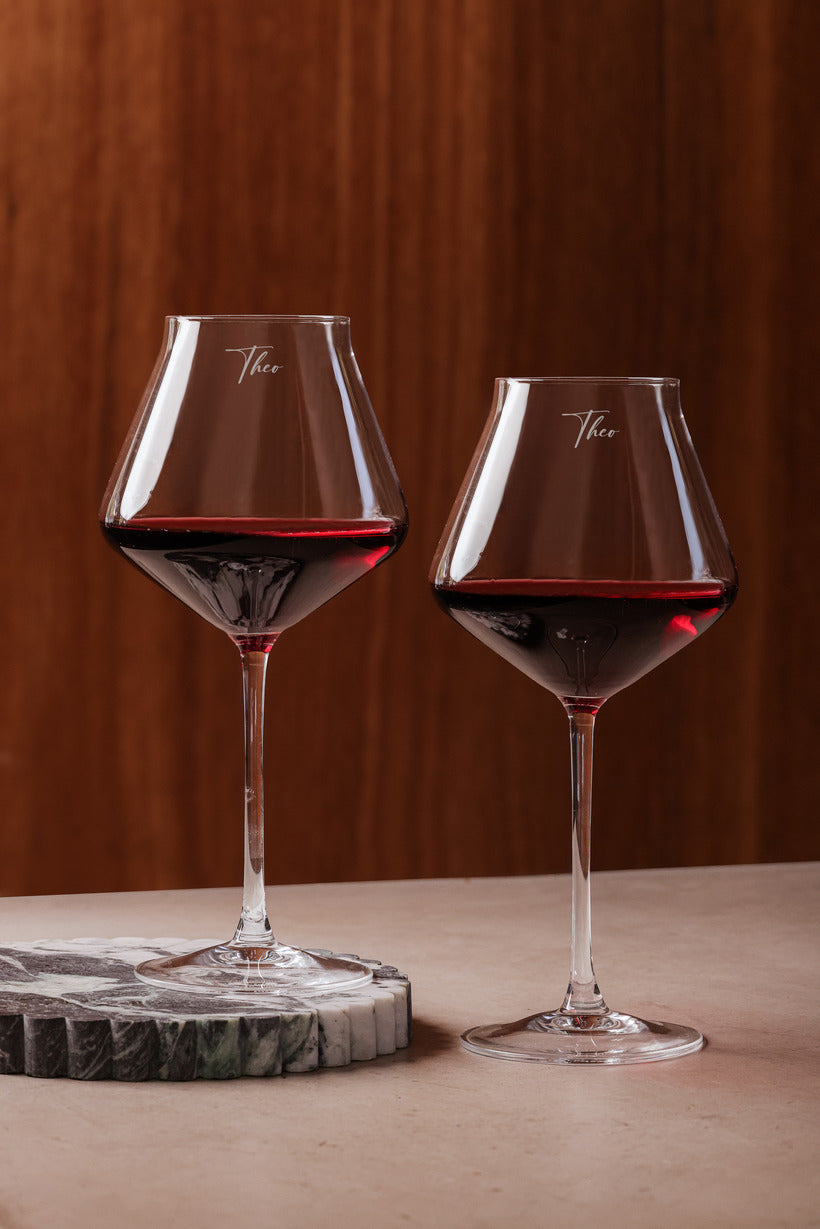
For Valentine’s, engraved glassware stands out because it turns ordinary rituals into personal ones: a quiet glass after dinner, a toast at home, a Friday-night pour.
4) Match the glass to the drinker
If you’re choosing glassware, make it suit the person rather than aiming for a picture-perfect set.
-
Red wine: larger bowl, more generous shape
-
Sparkling: slender flute or tulip shape
-
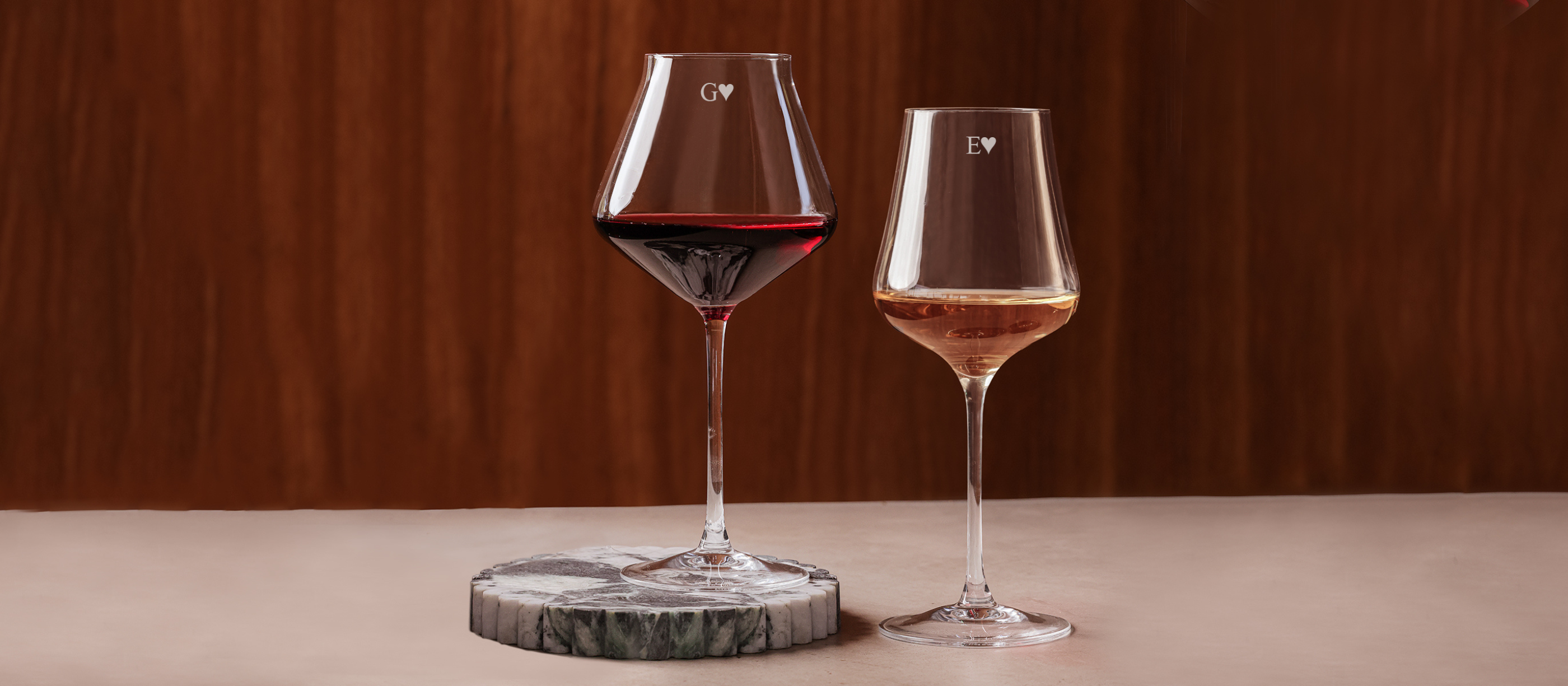
Couples with different tastes: two different styles can feel more thoughtful than matching
A personalised wine glass works especially well because it’s both romantic and useful. It doesn’t wait for a special occasion.
5) Ordering online: get it right the first time
When ordering at Mont Laurent, follow these steps.
-
Enter initials or symbols (often up to 3 characters per glass, with higher limits for certain calligraphy styles).
-
Set each item separately, for example:
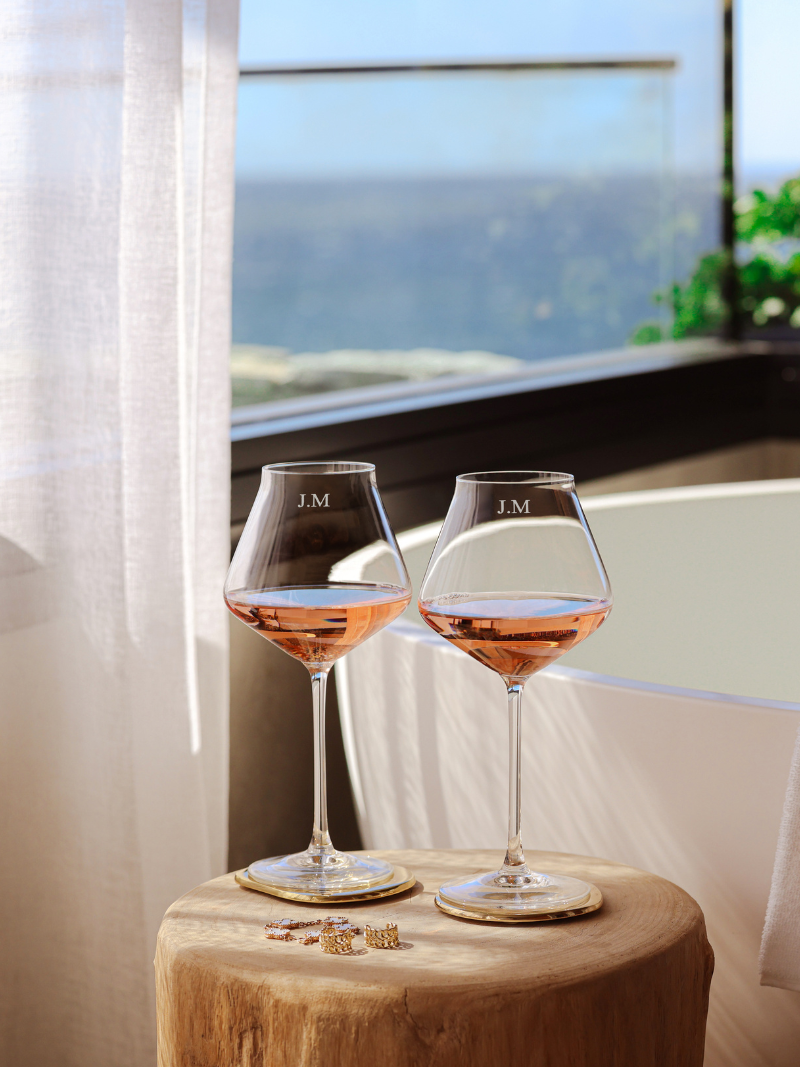
- Glass 1: J.M
- Glass 2: S.M
-
Add a symbol if offered: The love-heart is commonly accepted by copying and pasting ♡ into the field.
-
If you need more characters or a custom layout: Use live chat or email support rather than forcing it into the field.
-
Expect size changes: Longer engravings may print smaller, so they fit neatly.
Packaging options are usually straightforward too. Pick from these options:
- No gift box
- Gift box plus handwritten card
- Gift box plus ribbon (and often a card)
If there’s a message box, use it. A short, specific note beats a long poem.
6) Engraving ideas worth considering
-
“Mr” and “mrs”, or “mr” and “mr”
- Two initials with a symbol: G♡C
- Star signs (simple icons work best)
- Initials plus a date (small, placed near the base)
If you want something a little different, aim for a customised glass with a subtle placement choice (near the base or off-centre) rather than piling on extra characters.
7) Care: keep it crisp
Engraving and etching mark the surface of the glass and are generally more durable than printed logos, which can wear with repeated washing. Still, glass can scratch and cloud if treated roughly.
Practical care habits:
-
Wash with mild detergent and a soft cloth
- Avoid abrasive pads that can leave micro-scratches
- Keep delicate glassware away from harsh dishwasher cycles. Heat and strong detergents can damage fine glass over time
This is also why many people prefer personalised glassware that’s engraved rather than printed: it tends to keep its look with less fuss.
Ready to make Valentine’s Day feel personal? Choose your glass style, enter up to 3–4 initials, then select gift boxing and a handwritten message at checkout so it arrives ready to give.
Frequently Asked Questions:
1) What should I monogram for Valentine’s Day if I don’t know the “rules”?
Use one initial. It’s the least risky choice and still feels personal. If you want a couple-style monogram, many guides centre the shared surname initial, but that only suits couples with a shared surname. If surnames remain separate, two initials side by side usually reads better.
2) Which initials go first on a couple monogram?
Traditions vary. One common format places the wife’s first initial on the left, the shared surname initial in the centre (larger), and the husband’s first initial on the right. If the gift is for Valentine’s rather than a wedding, it’s fine to choose the order that looks balanced and matches how you sign cards.
3) Can I include symbols like a heart or star sign?
Yes, if the personalisation field accepts the character. Hearts, stars and zodiac icons work best when kept small and used once. Too many symbols can make a monogram look busy and reduce readability on curved glass.
4) Will an engraved design wear off in the dishwasher?
Engraving and etching are cut into the surface, so they don’t peel like ink prints. The bigger risks are clouding, micro-scratches, and breakage from heat, pressure and harsh detergents, especially for fine or crystal-style glassware. If you want to be cautious, hand wash with a soft cloth.
5) What’s a good inscription when I want more than initials?
Keep it short: two initials and a date, “Mr & Mrs”, “Mr & Mr”, or a brief two-letter mark for each person on a pair. Longer names can be done, but many engravers reduce text size to fit, which can change the look. If you’re aiming for a classic finish, fewer characters usually wins.